


At the end of my last blog, 2 weeks ago, I said both that David’s Dad, Roger, had arrived with us so we were likely to have a sociable week, and that the weather was due to turn more wintery so it would force me inside where I could progress the renovation of our fireplace. Both turned out to be true.
The day after writing the blog was the last of the very lovely hot, dry weather we have been enjoying that enabled me to do one thing that I knew I would have to complete at some point over the winter – changing our satellite receiver that provides UK television to our house, Priory and Hayloft.
When we had the very close lightening strike in July that blew all our LNBs, when I replaced ours I saw the bracket holding the dish was very corroded and, while replacing the LNB, the dish moved. At the time not sufficiently to lose the TV signal but evidently it was no longer perfectly aligned and I feared it could move more if we had strong winds.
A few weeks ago our Priory guests, who have stayed with us before, said that they couldn’t access the same channels they watched previously. At the same time we had the odd situation where we could watch a channel perfectly well during the day but the same channel was not accessible at night.
Having researched, it seems that as the dish was no longer perfectly aligned, with the different atmospherics between day and night, it meant any weak signal may no longer be picked up. I think the dish had moved even more so now was the time to fix it.

Thankfully, as I knew it was a job that would need to be done at some point, I had already bought a new dish and bracket so I spent the day up the ladder removing the old and installing and aligning the new.
It took a little longer as the dish is a little larger (to get the best possible signal) and I had to tweak a couple of the coax cables so they could reach the position of the new LNB. Something I will try to do in the next few weeks is cover the cables with something to protect them from the sun’s UV to prevent any future degradation.
While it is a larger dish, David thinks it looks like we can communicate with Mars, it is positioned to ‘hide’ it as best we can behind Priory’s roof.
When the weather did become more autumnal, I did shift my focus to the fireplace.
The first thing I did was try to clean the front of the soot stained slates with something similar to a drill-mounted sanding tool. It created a lot of dust, and made a small amount of difference to some of the larger slates but also reinforced that sandblasting would have been equally ineffective and so a waste of time and money.
Having cleaned them as much as I thought I would be able to do, I began the pointing.
Some months ago I volunteered for a morning with an association’s work party who are in the process of renovating an old farmhouse in the centre of the village to be a community asset. The work we did that morning was mixing lime mortar and using it to point and render the stonework so my volunteering was not entirely altruistic!
There, some of the ‘pointing’ was effectively applying the mortar as a render then, when it was sufficiently cured and hardened, brushing off the top layer to expose the stones underneath.
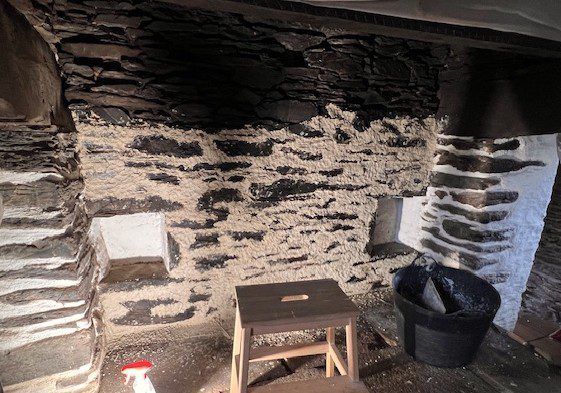
When I started the fireplace, I had hoped that I would be able to point in the more traditional manner and had bought a set of pointing trowels of different widths that I hoped would assist me applying the mortar. However, the stones are so irregular in size and shape that there are no neat horizonal or vertical joints and my method evolved into me forcing the mortar into the gaps by hand and covering the face of some of the more set-back slates.
The initial application was therefore quite rough but, from all the YouTube tutorials I had watched, I expected this to be the case until I did the brushing off required as it cured. As such, mine was a sort of hybrid of the 2 methods.
What became obvious quite quickly, was that an effective way of getting soot off the slates was with a lime mix as the colour leached into the damp mortar around the stones. It was also not helped with the large chimney being open to the elements above allowing water down when raining sufficiently with the wind from a certain direction and speed. It initially led to a discoloration of some of the surface which, thankfully seems to reduce as it dries.
I am fairly happy with the finished result, and I have shown the top edges to make a comparison with how it looked in the previous couple of blogs.
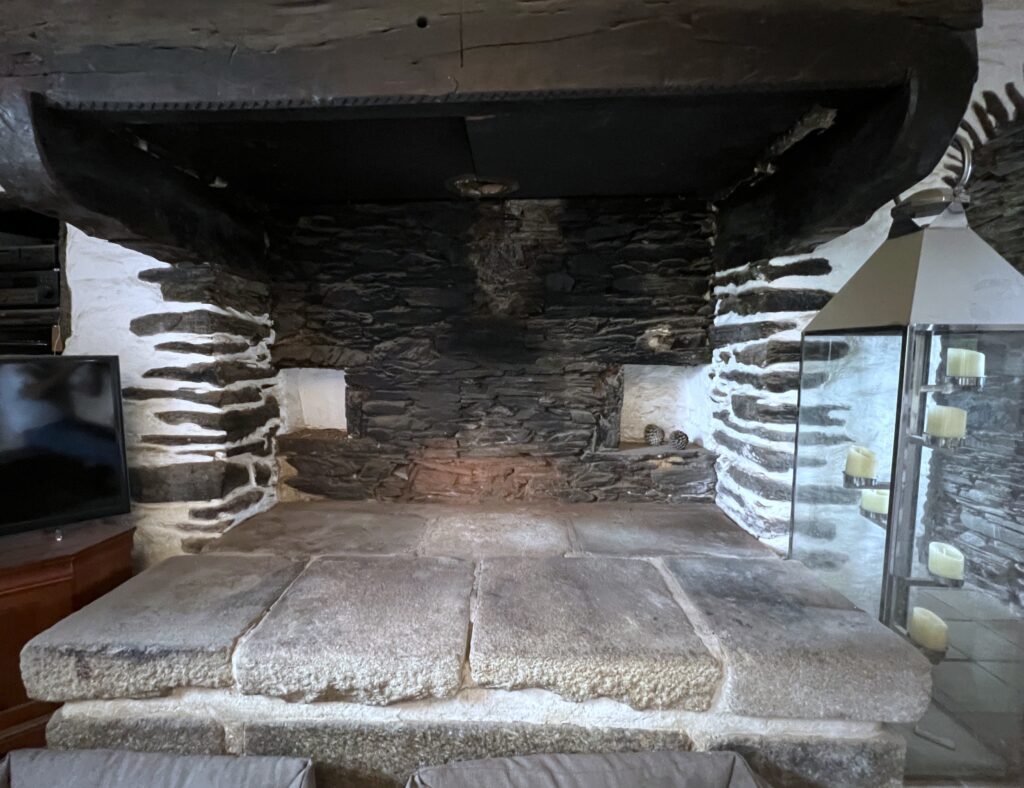


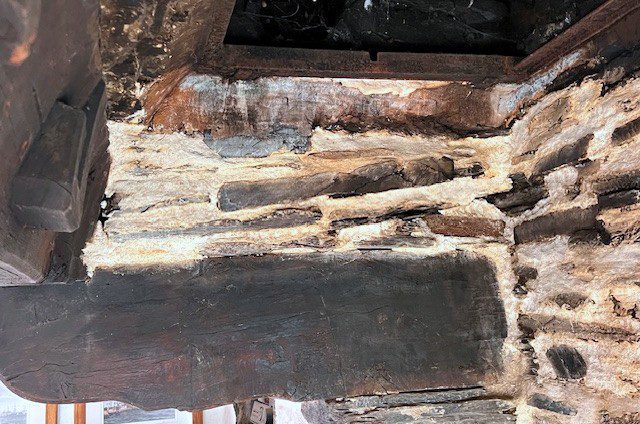
I was working to a deadline as tomorrow our new wood stove arrives and will be installed with a new flue and access at the top of the chimney which we hope will reduce the rain ingress. I am hoping that they won’t put the new register plate in too low as it will hide some of my hard work!
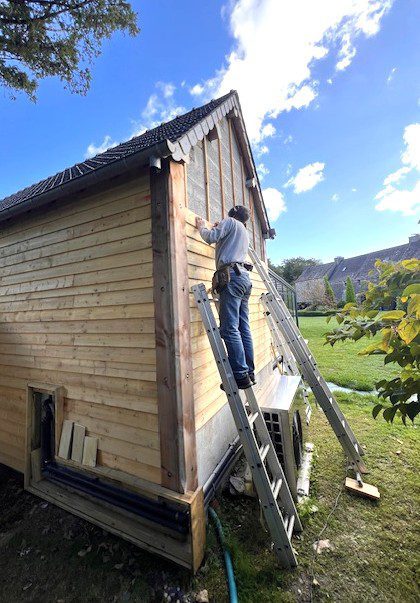
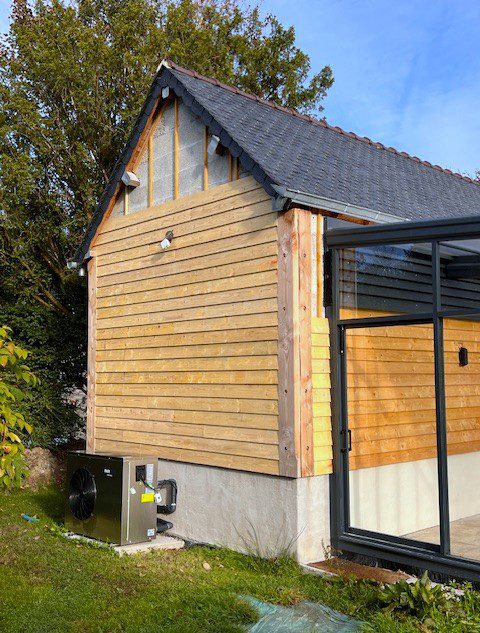
Having completed the fireplace, when the weather was dry I returned to cladding the pool house and have made good progress on one end although it was relatively slow as I had to work around the heat pump.
Roger left us yesterday but when he was with us we visited a number of our favourite restaurants with him as well as a couple we haven’t been to for many years. Roger has recently had knee operations so while previously active he has had his wings clipped but, being a train enthusiast, we took him on one of our walks on the old railway line which is conveniently flat.
We went back to Kermeur where the old station remains but is a shell and is one of the many very pretty walks to be done around.


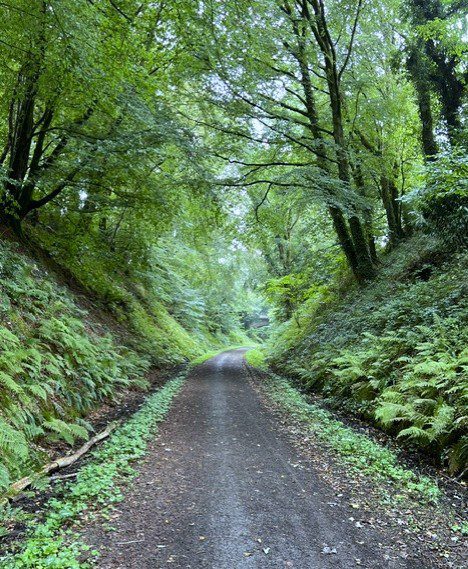
Today, when it was just David and I again, we continued on the line and arrived at the outskirts of Morlaix where the footpath seems to finish although the railway originally went all the way from Roscoff to Concarneau. We will have to have to do some more exploration – as well as continue further south as we have a small stretch to complete to get to Carhaix.
The coming week is looking increasingly unsettled and autumnal which will dictate what I will be able to do but at least we’ll have a new stove to keep us toasty!
À bientôt.